I did not expect one of my most memorable travel moments in Mexico to happen next to a Costco, of all places.
I know, it sounds ridiculous. When I picture travel magic in the Yucatán Peninsula, I think of quiet colonial streets in Mérida, a plate of cochinita pibil I can’t quite finish, limestone trails, and that sudden shock of blue water hidden underground. I do not usually picture shopping carts, warehouse aisles, or a parking lot where someone is arguing about the rotisserie chickens.
But that odd mix is exactly what made this story stick with me.
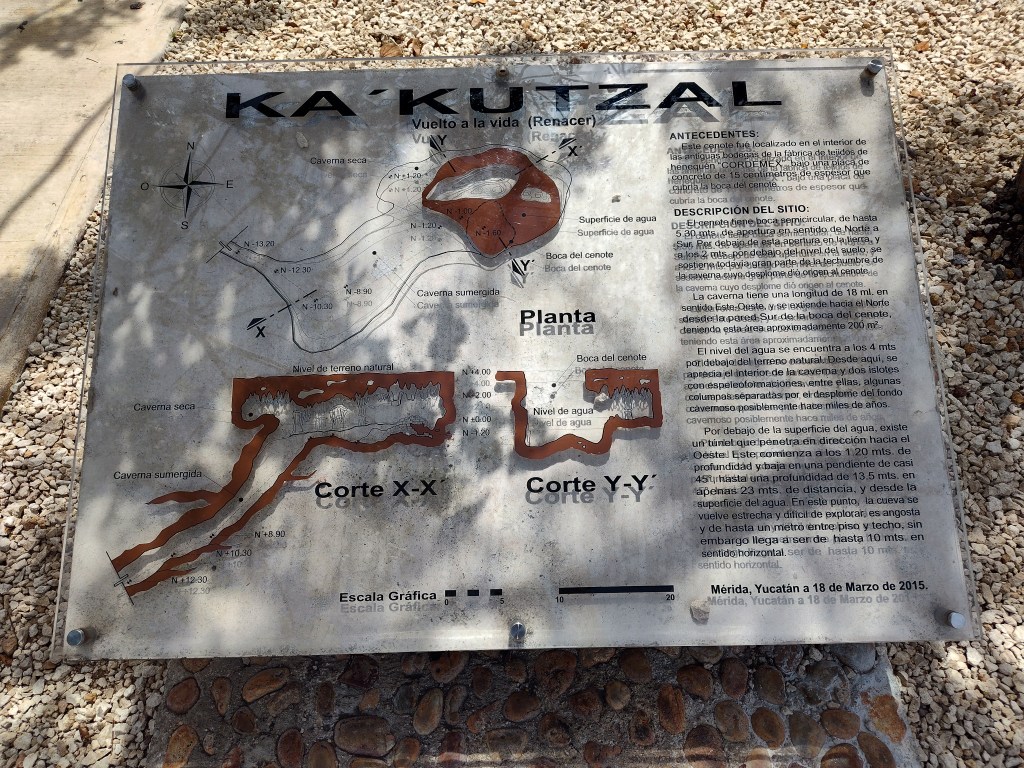
During renovations at a Costco in Mérida, workers found something far older and more delicate than anything you can stack on a pallet: a cenote. Under the totally ordinary floor of a modern store, there was clear blue water, rock, roots, and a whole living world that had quietly been there all along.
The discovery felt like a small nudge from the Yucatán itself. You can pave, build, expand, and remodel all you like, but the land has a long memory. In Mérida, that memory almost always leads back to water.
The surprise of finding a cenote where no one expected one
What moved me most was the contrast.
A Costco is about errands and practicality. It is where people go for bulk groceries, tires, snacks, household supplies, and whatever else seems like a good idea until you realize it comes in a pack of thirty. A cenote is the opposite kind of place. It asks you to slow down. It feels ancient. It pulls your attention underground and away from your shopping list.
So the idea of uncovering one during renovations felt almost poetic, in a “retired-Canadian-lady-gets-emotional-in-a-warehouse-club” kind of way.
From what has been shared about the discovery, the cenote had clear blue waters and signs of a diverse biosphere. That matters because cenotes are not just pretty swimming holes for tourists like me. They are ecosystems. Their water can hold fish, small crustaceans, microorganisms, insects, plant life, and sometimes cave-adapted species that depend on darkness, clean water, and steady conditions. During my visit, I even spotted two turtles. I took photos, but let’s just say my camera skills are more “retirement hobby in progress” than National Geographic, so they are not the best but they are all I have at the moment….
Even when a cenote looks still, it is busy. Water moves through underground channels. Limestone filters and shapes it. Roots stretch down toward it. Birds, bats, and insects may use the surrounding spaces. The life there can be subtle and easy to overlook—something I relate to more with every birthday—but it is very much real. There were 2 turtles the day I visited, but I unfortunately wasn’t able to get a clear picture.
Standing near a place like that, even in a built-up area, changes how you see the ground under your feet. It makes you wonder how many hidden chambers sit beneath streets, homes, stores, and sidewalks across Mérida, quietly doing their thing while we debate which size of olive oil to buy.
I remember feeling a mix of curiosity and protectiveness. It was beautiful, yes, but it also felt vulnerable. A cenote in a tourism brochure already gets a certain kind of protection through attention and rules. A cenote under a commercial property needs a different kind of care. It needs people to decide that wonder is worth preserving, even when it slows down construction schedules and makes accountants sigh.
Why cenotes matter so much in the Yucatán Peninsula
To understand why this Costco cenote stayed with me, it helps to understand the Yucatán Peninsula a little better—something I am still doing, one slightly-too-hot walk at a time.
Much of the peninsula is made of porous limestone. Rainwater does not gather in big surface rivers the way it does in many other places I have lived or visited. Instead, it sinks into the ground, filters through the rock, and forms underground rivers and pools. When the limestone ceiling collapses or opens up, a cenote appears.
That is the simple geological version. The emotional version runs much deeper.
For the Maya, cenotes were sources of fresh water, especially in a region where surface water can be scarce. They supported communities, agriculture, and travel. They also held spiritual meaning. Some were seen as entrances to the underworld, places for ceremony, offerings, and conversation with forces beyond everyday life. In other words, not just “nice spot for a dip” on a hot afternoon.
In Yucatán, a cenote can be:
- A lifeline in a dry landscape
- A sacred place tied to Maya cosmology
- A natural archive of geology and history
- A habitat for delicate species
- A gathering place for families and travelers
Mérida, the capital of Yucatán, adds another layer to this story. The city feels elegant and urban, with plazas, markets, museums, restaurants, and busy avenues where drivers appear to communicate mostly through honking. Yet it sits in a region shaped by underground water. The famous Ring of Cenotes, linked to the ancient Chicxulub impact structure (where I am headed next week for a long stay at the beach), stretches through parts of Yucatán and reminds us that the area’s natural history is vast and, frankly, humbling.
That is why this discovery matters to me. It is not just a quirky headline about a cenote at a store. It is a window into the fact that Mérida is built on a living karst world, one where natural and cultural history are always close to the surface—even when you are pushing a cart past a mountain of toilet paper.
How Costco preserved the cenote and honored Maya heritage
What could have been just a construction headache during renovations turned into something much more thoughtful.
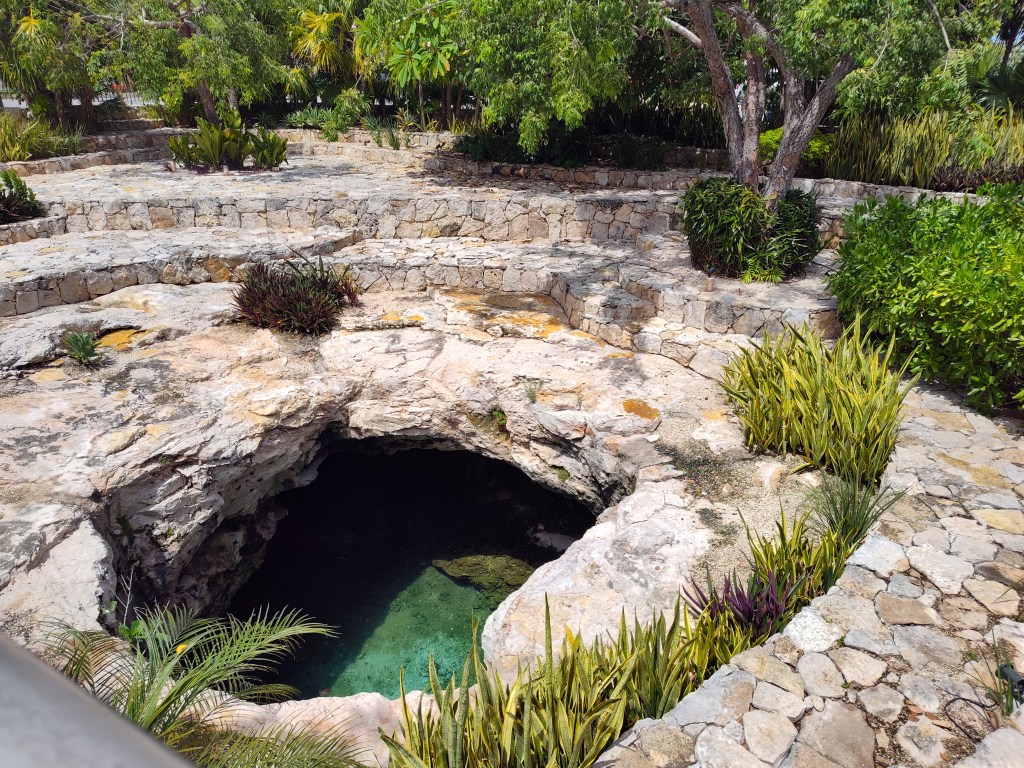
Rather than filling it in or pretending it was not there, of course, Costco did the right thing and preserved the cenote. The company protected the natural feature and turned it into something people could actually see. That choice matters. It shows that a modern building can make room for older stories, even when they surface in the middle of a renovation and probably mess up the schedule.
The part I appreciated most is that the cenote was not treated like a simple decoration, the way you might arrange fake plants around a display. It was framed as part of Yucatán’s identity and linked to Maya heritage. In a place like Mérida, that connection is not abstract or tucked away in a museum case. Maya culture is present in language, food, family histories, place names, textiles, ceremonies, and ways of understanding the natural world. You can hear it, taste it, and see it if you pay attention.
A preserved cenote inside or next to a commercial space will never replace the experience of visiting a wild or community-managed cenote. It should not even try. But it can do something useful. It can remind thousands of people, many of them locals simply running errands, that the land beneath Mérida is alive with history.
I kept thinking about how easy it would have been to erase it.
Construction projects often move fast. Budgets matter. Timelines matter. A hidden natural feature can be seen as a problem to solve, not a treasure to keep. Preserving it requires patience, consultation, safety planning, environmental care, and a willingness to say, “This belongs here too,” even if it means more meetings and revised blueprints.
That decision gave the cenote a future.
There is also something powerful about access. Not everyone has time or money to drive out to remote cenotes outside the city. Not everyone can spend a full day swimming, hiking, or taking tours. But someone buying groceries in Mérida might pause for thirty seconds, look down, and suddenly feel connected to the region in a new way—and then go back to price-checking cheese.
That tiny pause can be the beginning of respect.
What it felt like to see travel and daily life overlap
Travel keeps teaching me things, often when I least expect it.
I have had beautiful moments in the “obvious” places: watching the light change over a plaza, wandering through an archaeological site, hearing music drift out of a restaurant at night. Those moments are easy to recognize. They practically wave their arms and say, “This is special! Take a picture!”
This Costco moment felt different because it interrupted the ordinary.
There was something tender about imagining people pushing carts nearby while ancient water rested below. It made me think about how travel is not only about seeking famous sights. Sometimes it is about noticing that special places are woven into everyday life—quietly, stubbornly, and without any concern for our itineraries.
In Mexico, I have often felt that closeness between past and present. A single street corner can hold a colonial façade, a modern café with good Wi‑Fi, and a Maya word spoken casually between neighbors. A simple meal can carry techniques that are centuries old. A roadside market can feel more memorable than a landmark because someone takes the time to explain a fruit, a spice, or a family recipe to a slightly bewildered Canadian trying to keep up.
The Costco cenote gave me that same layered feeling.
It was not grand in the usual travel sense. There were no dramatic spotlights or choreographed music. It was simply there, quietly asking to be seen.
I found myself thinking about all the times I have rushed through a place, at home and abroad. How many things did I miss because I had already decided what mattered? How often did I treat errands as empty time, when the world around me was still full of clues and stories?
That is what this experience gave me: a softer kind of attention.
I even jotted down a few notes afterward because the moment felt too unusual to trust entirely to my memory, which now occasionally wanders off without telling me.
The photos that helped me hold onto the moment
Photos can never fully capture a cenote, no matter how diligently you squint at the screen and press the buttons very carefully.
They can show the color of the water, the curve of the stone, and the way light drops into the opening. They can help you remember exactly where you stood. But the feeling is harder to save. The coolness in the air. The hush. The odd sense that the earth has briefly opened a small door and invited you to peer in.
Still, I am grateful for photos, even the slightly crooked ones, because they let me return to the moment later from my kitchen table with a cup of tea.
The images I love most from cenote visits are not always the sweeping wide shots. Often it is the small details:
- Light trembling on the water
- Roots reaching down like thin ropes
- Mineral patterns in the limestone
- A leaf floating on the surface
- The deep blue that seems to glow from within
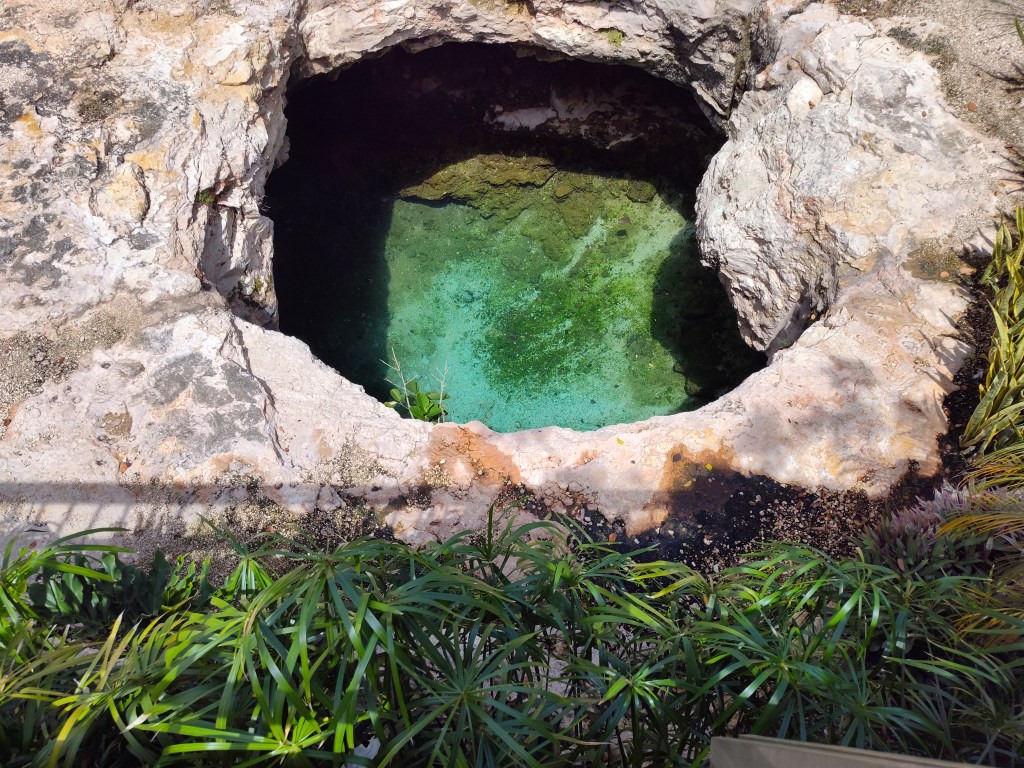
With the Costco cenote, photos do something else too. They help explain why preservation matters. A written description can sound charming, but an image makes the contrast immediate. You see the blue water and understand this is not just a crack in the floor. It is a living natural feature, part of a larger system, and part of a cultural region that deserves care.
Photos also make the story shareable in the best sense. Not as a novelty, not as “look what they found at the store,” but as an invitation. They whisper, “Look closer. Mérida has layers.”
And that layered feeling is what I carried away with me.
How this connects to the way I travel now
The older I get, the less interested I am in checking places off a list. I still love a good itinerary, colour-coded and all. I still save restaurants, museums, markets, and swimming spots like a woman who just discovered the “save” button on every travel app. But the trips that linger in my mind almost always include an unexpected twist.
A conversation with a shop owner. A wrong turn that leads to a small church. A rainstorm that forces a change of plan. A cenote discovered where a warehouse store was renovating and someone probably just wanted to finish their shift on time.
This story changed how I think about travel in Mérida and the Yucatán Peninsula. It reminded me that the region’s beauty is not limited to famous cenotes, the ones travelers (including me) build whole days around. It is part of the ground itself. It is hidden under neighborhoods, roads, and stores. It is part of ordinary life, even when we forget to notice.
It also made me think more seriously about responsibility, which is not always the fun part of a trip but might be the most important.
If we visit cenotes—if we swim in them, photograph them, or write about them—we should do it with care. That means following local rules, avoiding sunscreen or products that can harm the water when asked, respecting barriers, listening to local guides, supporting community-run sites, and remembering that these places are not props for our vacation photos. They are water sources, habitats, and sacred spaces.
The Costco cenote is unusual, but the lesson is simple: wonder and responsibility belong together, no matter how old you are or how many loyalty cards you carry.
The article that first led me to this story nudged me to look more closely at the ground beneath Mérida and at the many ways modern Mexico still meets ancient water.
If you are curious, you can read the piece that inspired this reflection here: Costco Mexico preserves a cenote discovered in Mérida.
For me, this will probably become a strange travel anecdote I tell my friends and family. It has turned into one of those gentle reminders I keep carrying from trip to trip: pay attention. Ask what is beneath the surface. Let ordinary places surprise you, even if you only stopped in for laundry detergent.
Sometimes the most meaningful travel story is not found at the end of a long dusty road. Sometimes it is waiting quietly under a place you thought you already understood.


Leave a comment